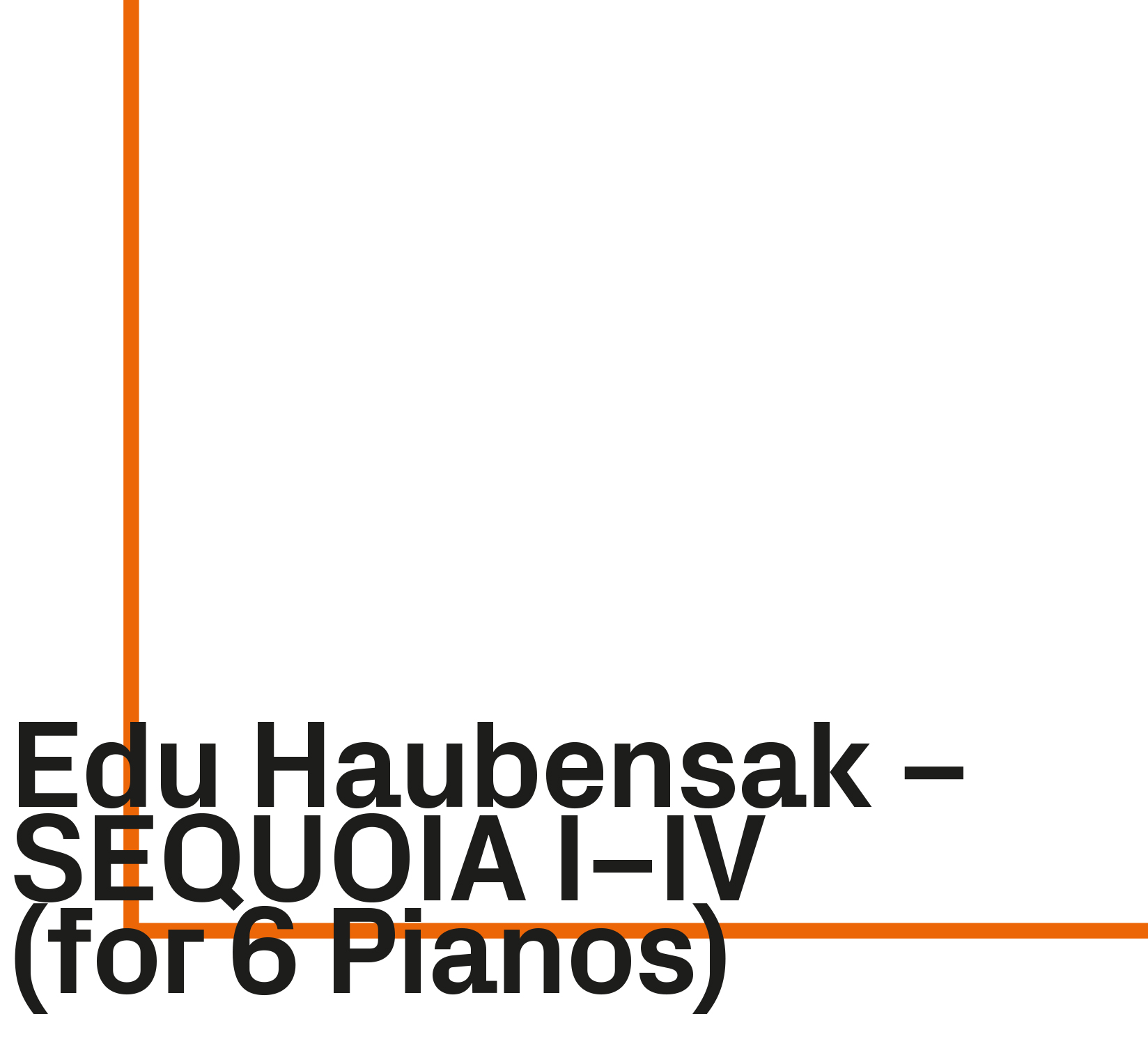
SEQUOIA I-IV (for 6 Pianos)

Produced as
About this album
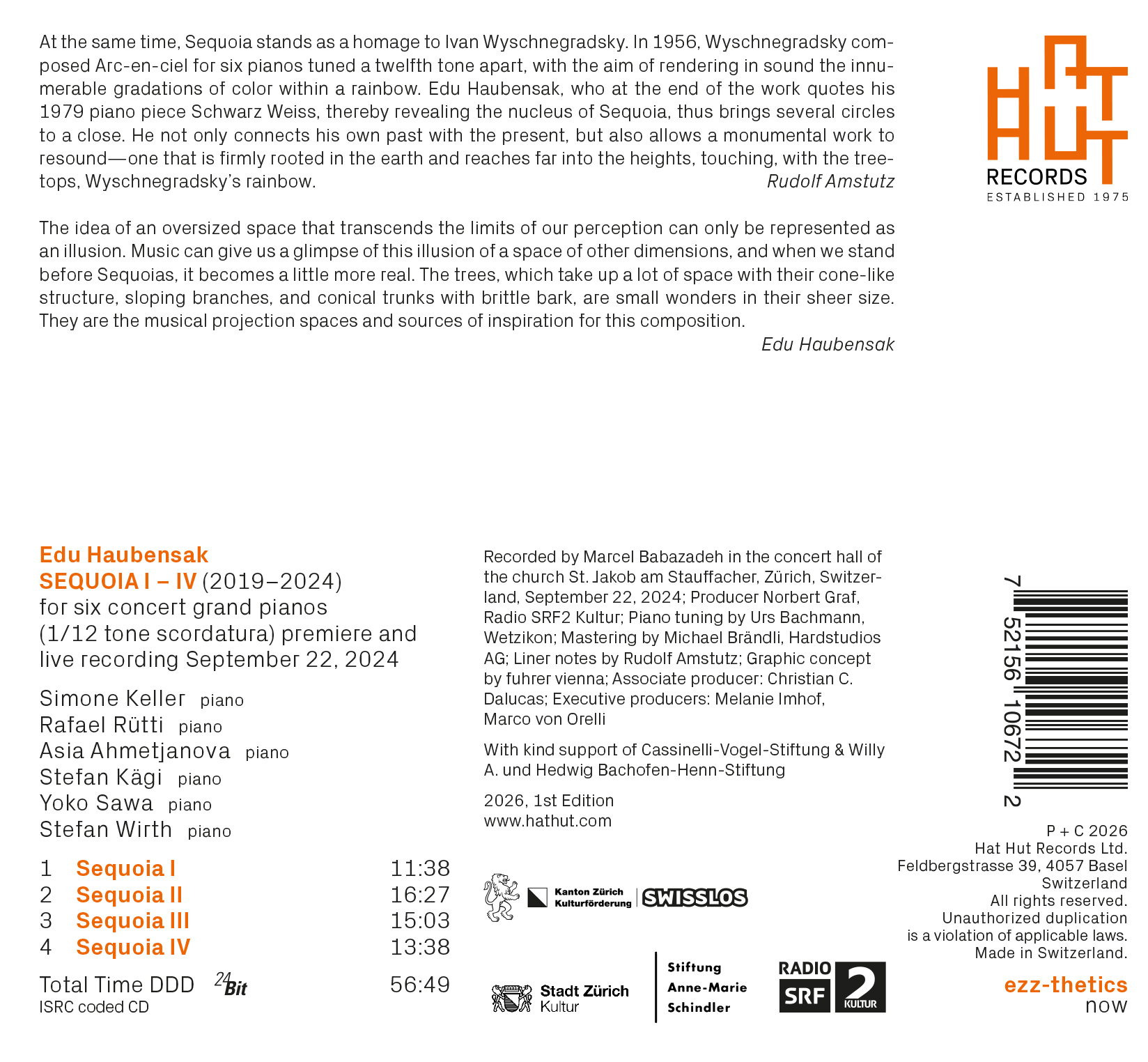
At the same time, Sequoia stands as a homage to Ivan Wyschnegradsky. In 1956, Wyschnegradsky composed Arc-en-ciel for six pianos tuned a twelfth tone apart, with the aim of rendering in sound the innumerable gradations of color within a rainbow. Edu Haubensak, who at the end of the work quotes his 1979 piano piece Schwarz Weiss, thereby revealing the nucleus of Sequoia, thus brings several circles to a close. He not only connects his own past with the present, but also allows a monumental work to resound-one that is firmly rooted in the earth and reaches far into the heights, touching, with the tree-tops, Wyschnegradsky's rainbow. – Rudolf Amstutz The idea of an oversized space that transcends the limits of our perception can only be represented as an illusion. Music can give us a glimpse of this illusion of a space of other dimensions, and when we stand before Sequoias, it becomes a little more real. The trees, which take up a lot of space with their cone-like structure, sloping branches, and conical trunks with brittle bark, are small wonders in their sheer size. They are the musical projection spaces and sources of inspiration for this composition. – Edu Haubensak
Program
1. Sequoia I 11:38 2. Sequoia II 16:27 3. Sequoia III 15:03 4. Sequoia IV 13:38


